
From ash decline
to a stronger woodland
A long-term programme to respond to ash dieback, diversify the woodland and create healthier habitats for wildlife and future generations.
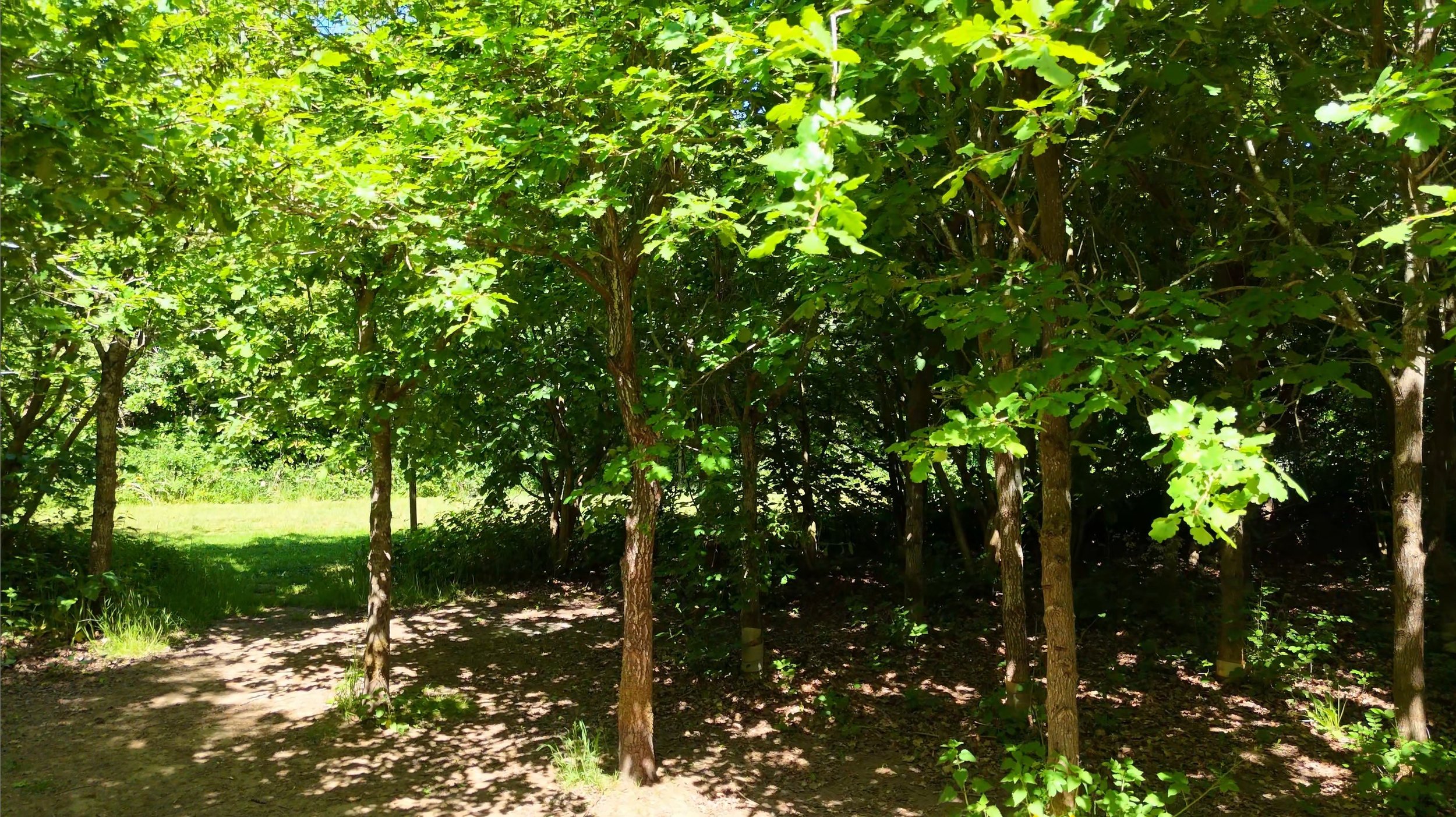
A woodland at a turning point
Nethercote Wood was planted in 2005 as part of the National Forest. Its future now depends on active care: significant areas contain ash affected by ash dieback, while the original planting has limited species diversity.
Our responsibility is to guide the woodland through that change, protect the habitat that matters and establish the varied canopy that will follow.
The aim is not simply to remove failing trees. It is to secure what replaces them and care for the woodland through recovery.
Why are we cutting down ash trees?
Felling can look alarming when the purpose is not visible. The work is not the destruction of the woodland. It is a planned response to ash dieback and the first stage of replacing a failing canopy with a healthier, more diverse woodland.
Ash dieback is causing decline
The disease damages the crown and vascular system of ash trees. Many affected trees continue to weaken and die, so simply leaving every tree standing will not preserve the existing canopy.
Dead ash becomes brittle and unsafe
As ash dies, branches and stems can become brittle and unpredictable. Planned removal allows work to be carried out safely and reduces the risk beside paths, working areas and places used by visitors.
Removal makes recovery possible
Felling is phased under an approved licence. Valuable habitat and suitable trees are retained where it is safe to do so, and the felled areas must be restocked and cared for as the next woodland establishes.
The restoration pathway
The work will be carefully planned and phased. Felling is one stage in a much longer process of establishment, protection, monitoring and woodland care.
Survey & plan
Assess habitat, tree condition, access, safety and the features that should be retained.
Fell safely
Remove dead and failing ash in planned phases while protecting valuable trees and habitat.
Replant diversity
Introduce a broader native mix rather than replacing one dominant species with another.
Build structure
Develop canopy layers, understorey, glades, rides, edges and safe retained deadwood.
Manage & monitor
Protect young trees, replace failures and adapt management as the woodland develops.
More species. More layers. More resilience.
Restocking will introduce a broader mixture of native trees and shrubs alongside open ground. The intention is a woodland with greater variation in age, height and structure, providing more ways for wildlife to feed, shelter and move.
Species and proportions will be refined through the ecological assessment and the final management plan.
Felling licence and Biodiversity Net Gain
The approved felling licence permits work within approximately 6.81 hectares and requires those areas to be restocked. Biodiversity Net Gain is a separate process: only habitat improvement beyond the relevant baseline and legal obligations can contribute to biodiversity units.
Woodland Restoration
Nethercote Woodland was planted in 2005 as part of the National Forest. Today, significant areas are dominated by ash affected by ash dieback, leaving a declining canopy and a woodland increasingly vulnerable to the loss of a single tree species.
Our response is not simply to remove timber. It is a long-term restoration programme designed to secure the woodland’s future. Dead and failing ash will be removed in carefully planned phases, while valuable trees, deadwood and habitat features are retained wherever it is safe and appropriate to do so.
The approved felling licence allows work within approximately 6.81 hectares and requires the felled areas to be restocked. Replanting will introduce a broader mixture of native trees and shrubs, including oak, wild cherry, hornbeam, mixed broadleaves and woody shrubs, alongside open ground. This greater diversity will help the woodland withstand future pests, diseases and climate pressures.
Restoration will also improve woodland structure through varied canopy layers, understorey, glades, rides, edges and retained deadwood. Establishment, replacement planting, protection and ongoing management will be essential as the new woodland develops.
The felling licence and our Biodiversity Net Gain project are separate processes. The licence permits felling and sets minimum restocking conditions. Biodiversity Net Gain must demonstrate measurable improvements beyond those minimum obligations, supported by ecological surveys, the statutory biodiversity metric and a long-term Habitat Management and Monitoring Plan.
The ecological assessment is now in progress. Until that work is complete, proposed habitat outcomes and biodiversity units remain preliminary. Our aim is clear: to replace a declining ash-dominated plantation with a healthier, more varied and resilient woodland managed for wildlife and future generations.
Woodland restoration
This is not simply a timber operation. It is a long-term programme to replace a declining ash-dominated plantation with a healthier, more varied woodland for wildlife and future generations.
A declining ash canopy
Planted in 2005 as part of the National Forest, significant areas are now dominated by ash affected by ash dieback. The loss of one dominant species leaves the canopy increasingly vulnerable.
Licensed, phased felling
The approved licence covers approximately 6.81 hectares. Dead and failing ash will be removed in planned phases, while valuable trees, deadwood and habitat features are retained wherever safe.
Diverse native restocking
Oak, wild cherry, hornbeam, mixed broadleaves and woody shrubs will establish alongside open ground, reducing reliance on a single tree species and improving resilience.
A woodland with more layers
Canopy, understorey, glades, rides, edges and retained deadwood will create richer structure. Young trees will need protection, replacement planting, monitoring and ongoing management.
Permission to fell, with a duty to restock
The licence allows the approved felling work and sets the minimum restocking conditions that must be met. It ensures that felling is followed by woodland renewal.
Improvement beyond minimum obligations
BNG is a separate process. It must demonstrate measurable habitat improvement beyond the relevant baseline and legal duties, supported by surveys, the statutory metric and a long-term management plan.
Explore the BNG project →Proposed habitat outcomes and biodiversity units remain preliminary until the assessment is complete. The direction is clear: a healthier, more varied and more resilient Nethercote Wood.
From decline to recovery