
Nethercote Wood · Mercian Charcoal
From woodland
brash to
lasting purpose.
Charcoal and biochar made here at Fire & Stars. A practical way to use the smaller wood left behind as we care for our woodland.
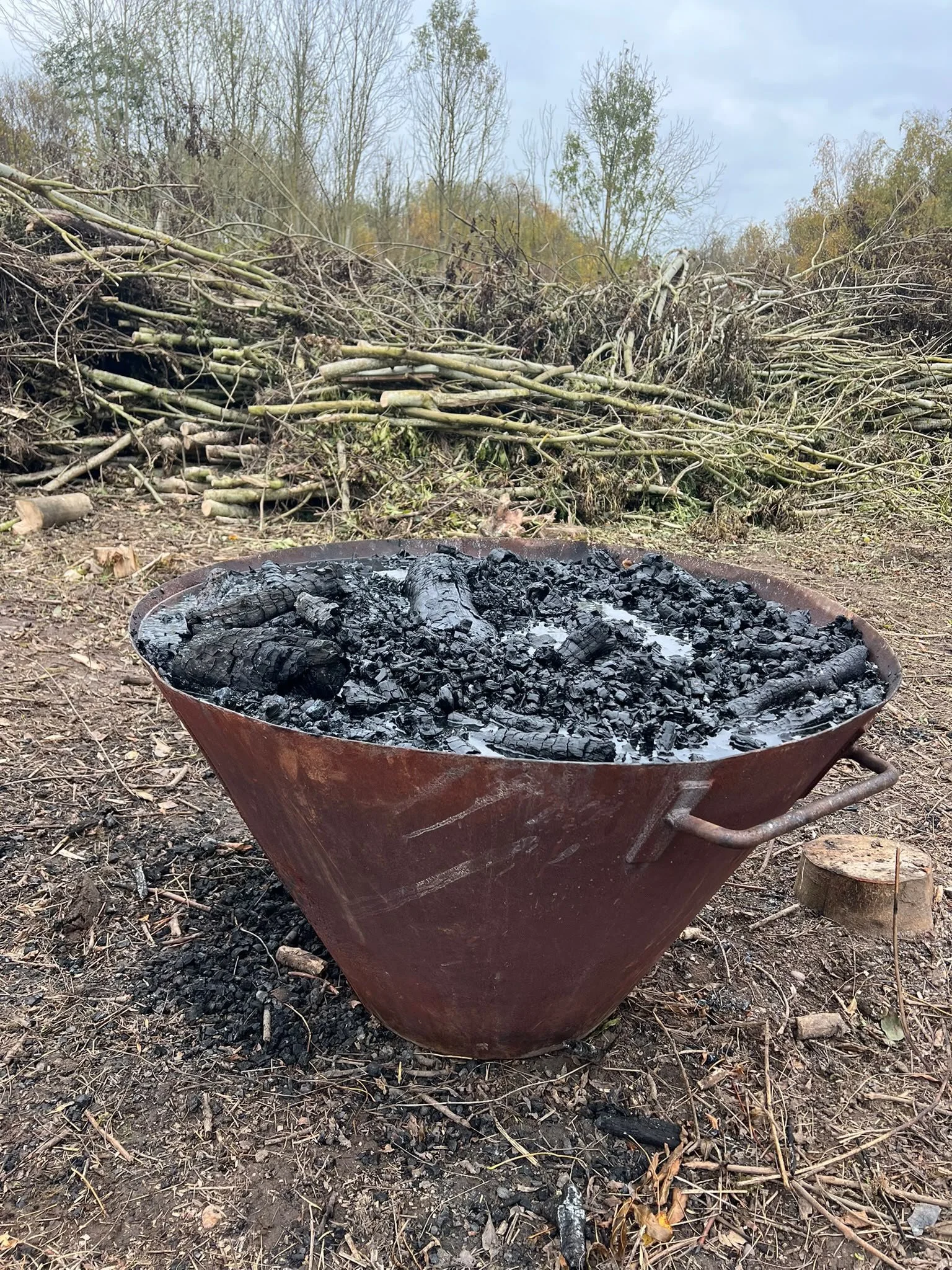
A working woodland
More of the wood.
Put to good use.
Paul from Mercian Charcoal produces charcoal and biochar on site. He uses brash: the smaller branches and woody material from our woodland work that we would otherwise chip and spread back into the woods.
It is an end-to-end approach, linking woodland management with useful products made here. Mercian also works with managed woodlands across the Midlands, keeping the craft of charcoal making alive.
Care for the woodland
Woodland work produces timber, branches and smaller woody material.
Make it here
Paul turns suitable material into charcoal and biochar on site.
Give it a purpose
Charcoal is used as fuel. Biochar is made for use in soil.
Made in the woodland
From the kiln to biochar.
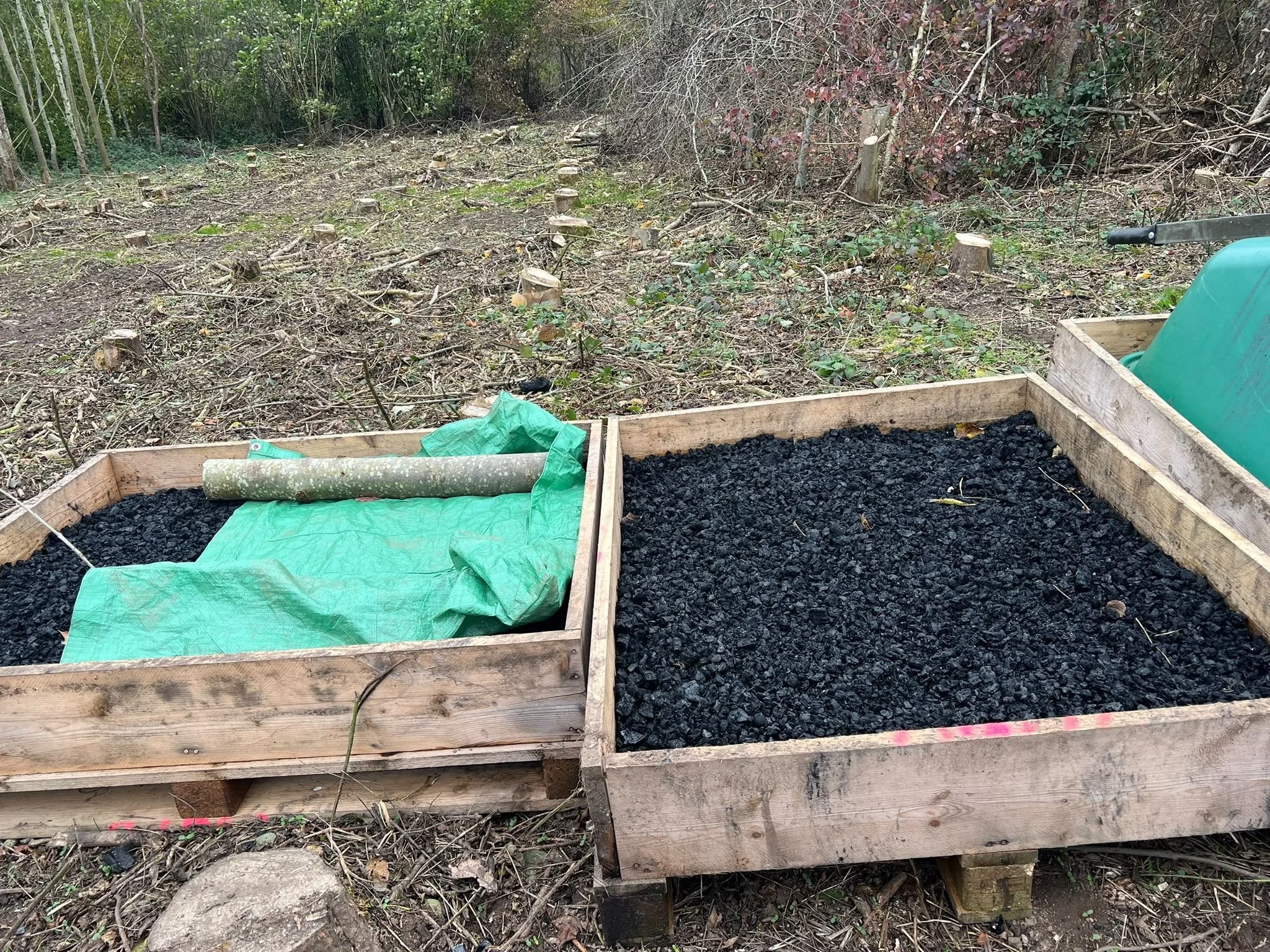
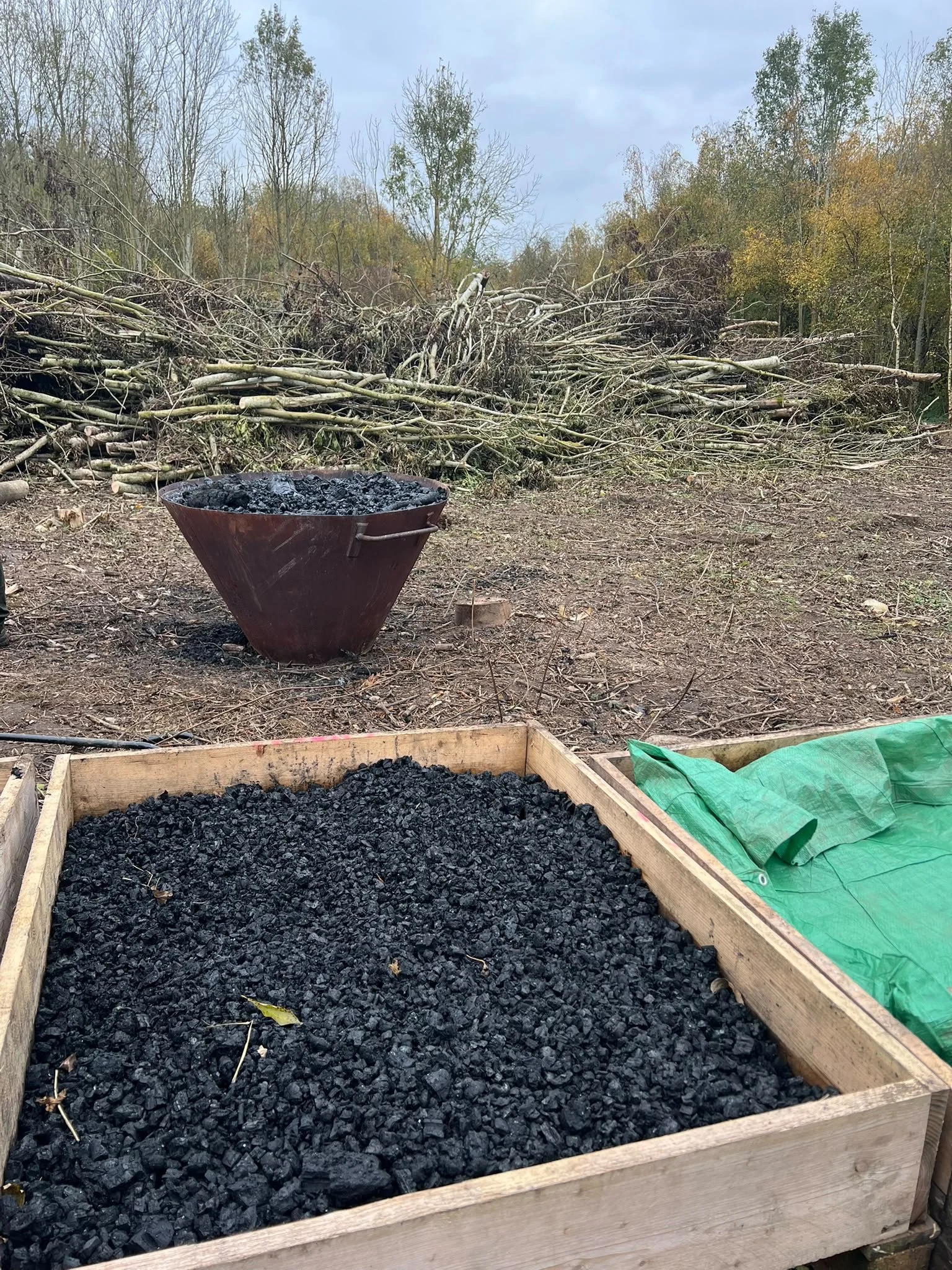
Biochar, explained
What is it used for?
Biochar is a porous, carbon-rich material made by heating organic matter with limited oxygen. In the garden, its main role is as a soil conditioner, rather than a fertiliser.
Water & nutrients
Some biochars can help soil retain water and nutrients, particularly in sandy soils. Results depend on the biochar and the soil.
Soil structure
Its pore structure can help aeration and provide spaces for soil microbes. It can be incorporated into suitable beds and planting areas.
Growing mixes
Appropriate biochar products can be used in compost-based growing media or planting backfill. Follow the producer’s preparation and application guidance.
These are general uses, not measured outcomes for our material. Biochar can alter soil pH and does not replace fertiliser. Read the RHS guide to biochar.
The science · one local sample
What the analysis tells us.
Professor Colin E. Snape at the University of Nottingham analysed a local biochar sample supplied by Paul. He described the sample as persistent biochar.
The reported carbon content after excluding moisture.
The reported hydrogen-to-carbon ratio, used when assessing carbon structure.
The reported SPAC result for the sample analysed.
Taken together, the professor’s findings support his description of this sample as persistent biochar. They do not certify every batch, establish a guaranteed lifetime in soil, demonstrate crop benefits or verify a carbon-credit claim.
Using it thoughtfully
The right material.
For the right soil.
Good use starts with understanding the product and the place it will go. Ask Paul about the biochar’s suitability and preparation before applying it.
- 01Check your soil type, pH and planting needs.
- 02Ask about batch testing and intended uses.
- 03Follow product-specific preparation and application rates.
- 04Use biochar intended for soil, not barbecue briquettes or stove residues.